Mr. Winter Walk-In Coolers and Freezers Review
Choosing a walk-in cooler or freezer is not the same as buying a standard commercial refrigerator. A walk-in box becomes part of the daily workflow of a restaurant, market, bakery, brewery, convenience store, florist, or food production business. It affects inventory control, food safety, labor efficiency, energy usage, delivery planning, and long-term operating costs.
That is why brand selection matters.
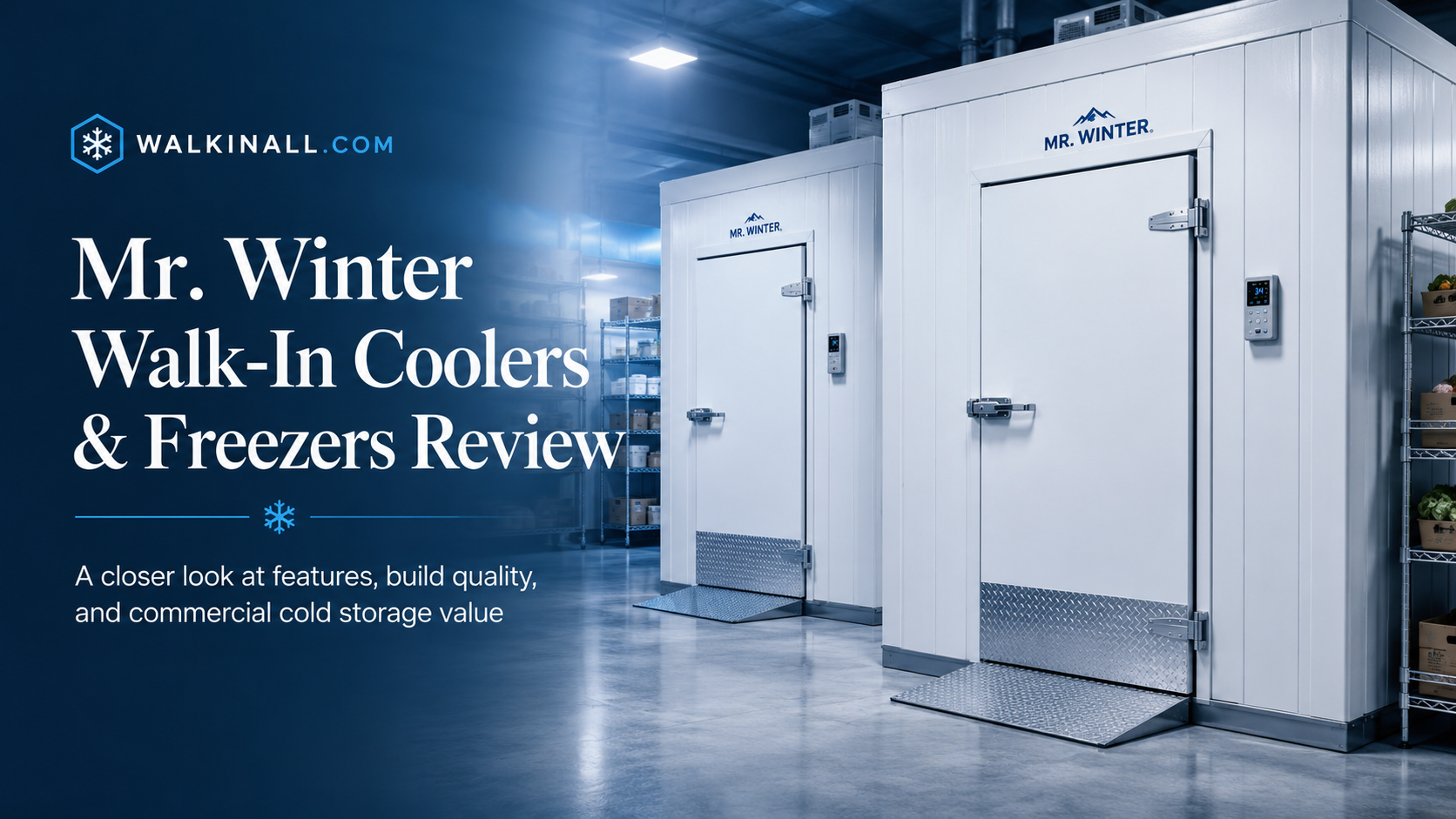
Mr. Winter is one of the names buyers often encounter when comparing commercial walk-in coolers, walk-in freezers, cooler-freezer combos, and custom cold storage rooms. The brand is especially relevant for businesses that want a practical balance between standard quick-ship models and more customized cold storage solutions.
In this review, we will look at what Mr. Winter offers, where the brand performs well, what buyers should check before purchasing, and whether a Mr. Winter walk-in cooler or freezer is a good fit for your operation.
About Mr. Winter
Mr. Winter is a commercial walk-in cooler and freezer manufacturer based in Florida. The company focuses on cold storage equipment for foodservice, retail, floral, beverage, and other commercial applications. Its product range includes standard walk-in coolers, walk-in freezers, cooler-freezer combination boxes, display walk-ins, replacement doors, and larger refrigerated warehouse-style projects.
One of the main advantages of the brand is that it serves both standard and custom needs. Some businesses simply need a common-size walk-in cooler as quickly as possible. Others need a more specific layout, finish, door configuration, or cold storage design. Mr. Winter positions itself to serve both types of customers.
For buyers comparing available options, Atlantic Restaurant & Supermarket Equipment lists a dedicated selection of Mr. Winter walk-in coolers and freezers, including standard commercial models suitable for restaurants, supermarkets, and other foodservice operations.
Product Range
Mr. Winter’s walk-in product range can generally be divided into several categories.
Walk-In Coolers
Walk-in coolers are designed for medium-temperature storage. These are commonly used for produce, dairy, beverages, prepared foods, flowers, and general refrigerated inventory. Restaurants use them for daily kitchen inventory, while convenience stores and supermarkets may use them for back-room beverage or dairy storage.
Mr. Winter offers both standard and custom walk-in cooler options. Standard models are useful when the buyer can work with common dimensions and wants a faster purchasing process. Custom models are better when the available space, traffic flow, or product mix requires a specific layout.
Walk-In Freezers
Walk-in freezers are designed for low-temperature storage. They are used for frozen foods, meat, seafood, ice cream, bakery products, and other frozen inventory. Freezer projects require more planning than cooler projects because flooring, insulation, refrigeration load, and door usage are more critical.
A walk-in freezer typically needs either an insulated floor panel or an insulated concrete floor. This is an important detail buyers should clarify before ordering. Installing a freezer incorrectly can lead to energy loss, floor issues, frost problems, and poor performance.
Cooler-Freezer Combos
A walk-in cooler-freezer combo combines medium-temperature and low-temperature storage in one connected structure. This can be a smart choice for businesses that need both refrigerated and frozen storage but want to save space compared with installing two completely separate boxes.
The shared wall can reduce material requirements and may make the layout more efficient. However, combo units require careful planning because the cooler and freezer sections have different refrigeration needs. Door placement, access points, traffic flow, and floor requirements should be reviewed before purchasing.
Quick-Ship Walk-Ins
Mr. Winter’s quick-ship options are intended for buyers who need a faster path to installation. These models are typically pre-manufactured in standard sizes, finishes, and configurations. For many restaurants and retail food businesses, this is the most practical option because it reduces the complexity of the buying process.
Quick-ship units are a strong fit when the business has some flexibility on size and layout. They may not be ideal for unusual spaces, highly specialized product storage, or front-of-house display applications where the appearance and exact dimensions matter more.
Custom Walk-Ins
Custom walk-ins are designed around the project. These are better for supermarkets, breweries, food production facilities, floral businesses, pharmaceuticals, or any operation with unusual space constraints. A custom walk-in can include specific dimensions, finishes, doors, refrigeration planning, and layout requirements.
The tradeoff is time and complexity. Custom units usually require more communication, more technical planning, and longer lead times than standard quick-ship units.
Construction and Design
A walk-in cooler or freezer is only as good as its panels, insulation, doors, and refrigeration planning. Mr. Winter emphasizes commercial-grade construction and offers both foamed-in-place and laminated walk-in options.
The panel system matters because it affects insulation performance, structural strength, cleaning, and long-term durability. In commercial use, panels must handle frequent door openings, staff traffic, carts, racks, moisture, and cleaning routines.
Finishes are another important consideration. Galvalume and galvanized finishes are common in walk-in construction because they provide a practical combination of durability, corrosion resistance, and cost control. Stainless steel may be used in higher-abuse or more specialized environments, but it usually increases the cost.
Floor selection is also important. Some walk-in coolers can be installed without an insulated floor when placed on a suitable existing slab. This can reduce cost and make rolling access easier. Freezers, however, require much more attention to floor insulation because heat transfer from below can reduce performance and create long-term problems.
Refrigeration Options
When reviewing any Mr. Winter walk-in, buyers should pay close attention to the refrigeration configuration. Some models are designed for remote refrigeration, while others may use self-contained or packaged systems.
A remote refrigeration system places the condensing unit away from the box. This can reduce heat and noise near the walk-in, but it usually requires professional refrigeration installation. A self-contained system is often simpler from a project-planning standpoint, but it may not be suitable for every location or load requirement.
The right choice depends on the building, climate, box size, usage pattern, and installation environment. A small indoor cooler for a restaurant may have different requirements than an outdoor freezer or a supermarket storage room.
Before buying, confirm whether the listed unit includes refrigeration, what type of refrigeration is included, and whether the system is properly sized for your intended use.
Best Use Cases for Mr. Winter
Mr. Winter is a strong candidate for several types of buyers.
Restaurants can use Mr. Winter walk-in coolers for back-of-house ingredient storage, beverage storage, and prep inventory. A standard-size quick-ship cooler may be enough for many independent restaurants.
Convenience stores and small markets may benefit from walk-in coolers, freezers, or display-style cold storage. These businesses usually need dependable storage for beverages, dairy, frozen foods, and grab-and-go items.
Bakeries, breweries, and ice cream shops often need more specific temperature zones. For these buyers, custom sizing and refrigeration planning become more important.
Florists can use walk-in coolers to preserve flowers and improve product life. In these applications, temperature consistency and humidity considerations may be more important than raw storage capacity.
Food production businesses may need larger or more specialized cold rooms. For these projects, custom design and professional planning are usually the better route.
Strengths of Mr. Winter
The first major strength is flexibility. Mr. Winter offers both standard and custom walk-in solutions, which gives buyers more room to match the product to their actual space and business model.
The second strength is commercial focus. This is not a general appliance brand trying to serve every refrigeration category. Mr. Winter is specifically associated with walk-in coolers, walk-in freezers, and commercial cold storage.
The third strength is the availability of quick-ship options. Many small businesses do not have months to wait for cold storage. A standard quick-ship model can be a practical solution when timing is important.
The fourth strength is the range of configurations. Buyers can compare indoor and outdoor units, floor and no-floor boxes, cooler and freezer models, remote and self-contained refrigeration options, and different footprints.
Things to Check Before Buying
Even with a strong brand, buyers should not order a walk-in cooler or freezer without checking several details.
First, confirm the exact dimensions. Walk-in sizes are often described in nominal terms, but the actual exterior dimensions may differ slightly. Make sure the unit fits your available space, including door swing, ceiling clearance, wall clearance, and service access.
Second, confirm the floor requirement. A cooler without a floor may work in some locations, but a freezer needs proper insulation below. This is one of the most important differences between cooler and freezer projects.
Third, confirm the refrigeration type. Remote, self-contained, and top-mounted systems are not interchangeable in every situation. Installation requirements, heat rejection, noise, service access, and cost can vary significantly.
Fourth, check whether the unit is indoor or outdoor rated. Outdoor walk-ins may require weather protection, rain roof considerations, and proper placement.
Fifth, review the lead time. Quick-ship does not always mean immediate delivery, and custom projects naturally require more time.
Finally, work with a seller that can help you compare models, not just process an order. Walk-ins involve sizing, refrigeration, logistics, and installation planning. Guidance matters.
Potential Limitations
Mr. Winter may not be the lowest-cost option for every buyer. Businesses shopping only by price may find cheaper alternatives, especially in imported or used equipment. However, the lowest upfront price is not always the best value when cold storage performance, support, and long-term reliability matter.
Another limitation is that custom projects require more planning. If your business needs a specialized layout, you should expect a longer quote and approval process. That is normal for custom walk-ins, but it is still something buyers should plan for.
Also, refrigeration installation should not be treated casually. Even a well-built walk-in box can perform poorly if the refrigeration system is incorrectly selected or installed. Professional refrigeration guidance is essential.
Is Mr. Winter Worth Considering?
Yes, Mr. Winter is worth considering for commercial buyers who need a serious walk-in cooler, freezer, or cooler-freezer combo. The brand is especially appealing for businesses that want a manufacturer focused on walk-in cold storage rather than a general equipment brand with a limited walk-in catalog.
Mr. Winter’s biggest advantage is the combination of standard quick-ship options and custom project capability. That makes it useful for both straightforward restaurant storage needs and more complex cold storage layouts.
For a small restaurant, a standard Mr. Winter walk-in cooler may provide the right balance of speed, size, and reliability. For a market, bakery, florist, brewery, or food production business, the ability to explore custom configurations can be even more valuable.
The key is to buy the right configuration. Before ordering, confirm the box size, floor requirement, refrigeration type, indoor or outdoor placement, lead time, and installation responsibilities. When those details are handled correctly, Mr. Winter can be a strong long-term cold storage investment for commercial operations.

Related Posts
AmeriKooler Walk-In Cooler Review
Buying a Walk-In Cooler in New Jersey