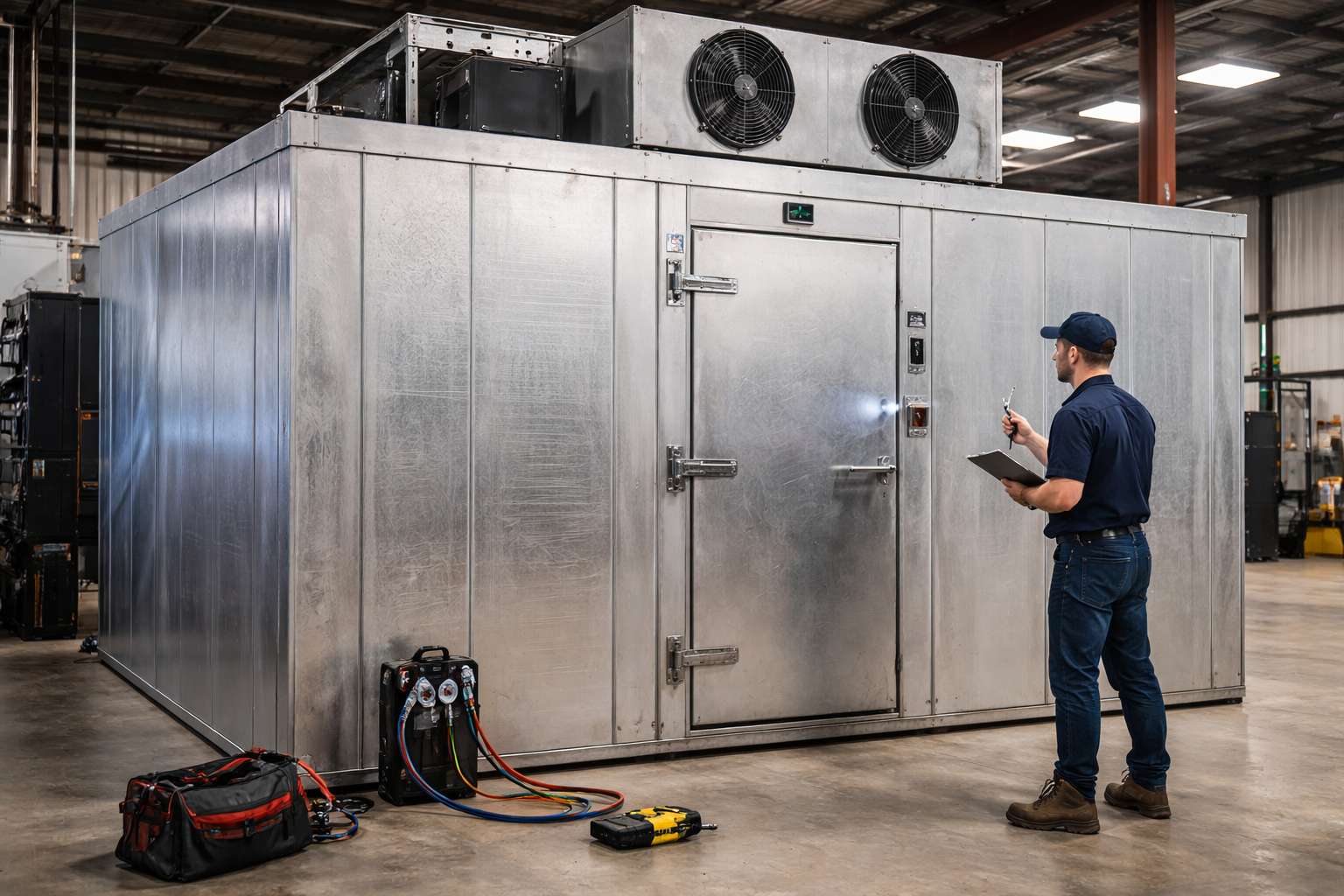
Buy Used Walk In Cooler
A used walk in cooler can look like an attractive shortcut to saving money—especially for restaurants, warehouses, and food businesses trying to control upfront costs. However, in commercial refrigeration, “used” does not simply mean cheaper. It introduces variables related to performance, efficiency, compliance, and long-term reliability that must be carefully evaluated.
This guide is written to help buyers understand when a used walk-in cooler makes sense, when it does not, and how to evaluate one properly. The goal is not to push a sale, but to ensure that any decision is informed, realistic, and aligned with operational needs.
What Is a Used Walk-In Cooler
A used walk-in cooler is a previously installed commercial refrigeration system that has been removed from its original location and is being resold as a complete unit or in parts. This may include insulated panels, doors, refrigeration systems, and hardware that have already seen years of service.
It is important to distinguish between three commonly confused terms: used, refurbished, and reconditioned. A used walk-in cooler is typically sold “as-is,” with minimal cosmetic or mechanical updates. A refurbished unit may have been cleaned, tested, or partially repaired, but it is still based on previously used components. A reconditioned system usually involves more extensive work, such as replacing worn refrigeration components or damaged panels, although standards vary widely by seller.
Used walk-in coolers can make sense in specific scenarios. Start-up restaurants with limited capital, temporary food storage needs, seasonal operations, or businesses expanding short-term capacity may consider used equipment as a bridge solution. In these cases, the lower initial cost may outweigh long-term efficiency concerns.
However, used walk-in coolers are not ideal for high-volume operations, facilities with strict health inspections, or businesses that rely on uninterrupted cold storage. In these environments, reliability, warranty coverage, and energy efficiency often matter more than saving upfront costs.
Pros and Cons of Buying a Used Walk-In Cooler
The primary advantage of a used walk-in cooler is cost. In many cases, used systems are priced significantly lower than new or custom-built units. For buyers with immediate needs or tight budgets, this can be appealing.
Availability is another potential advantage. Some used units are already dismantled and ready for quick delivery, which can be beneficial when timelines are tight. In contrast, new walk-in coolers—especially custom sizes—may require longer lead times.
However, the disadvantages are often underestimated. The biggest concern is uncertainty. With used equipment, it is difficult to know how the system was operated, maintained, or overloaded in its previous environment. Refrigeration components may be near the end of their service life, even if they appear functional during a brief inspection.
Energy efficiency is another major drawback. Older walk-in coolers often lack modern insulation standards and efficient refrigeration systems. Over time, higher electricity consumption can erase any initial savings.
There is also the issue of limited or nonexistent warranty coverage. If a compressor fails or panels begin to leak air, repair costs can quickly exceed the price difference between used and new equipment.
Professionals evaluate used walk-in coolers cautiously, understanding that lower purchase price does not always mean lower total cost.
What to Inspect Before Buying a Used Walk In Cooler
Inspection is the most critical step when evaluating a used walk-in cooler. A professional assessment goes far beyond surface appearance.
The insulated panels should be examined for corrosion, warping, swelling, or signs of moisture intrusion. Any damage to the insulation core can severely compromise thermal performance. Panel cam-lock systems must be intact and functional; damaged locks can prevent proper sealing during reinstallation.
Doors deserve special attention. Door frames, hinges, closers, and gaskets must seal tightly. Even small air leaks can cause temperature instability, excessive frost buildup, and increased compressor runtime.
The refrigeration system—evaporator, condenser, and compressor—should be evaluated for age, brand, and service history if available. Noise, vibration, oil residue, or inconsistent cycling can indicate internal wear. Electrical compatibility with the installation site is also essential, as mismatched voltage or phase requirements can require costly upgrades.
Finally, buyers should consider whether all necessary components are included. Missing trim, floor sections, ramps, or control panels can add unexpected costs and delays.
Used Walk In Cooler Pricing
Used walk-in cooler pricing varies widely, and understanding what drives the cost helps buyers avoid unrealistic expectations.
Size is the most obvious factor. Larger coolers require more panels, more insulation, and more powerful refrigeration systems. Panel thickness also plays a role, as thicker insulation typically performs better but costs more.
The refrigeration system has a significant impact on price. Systems from reputable manufacturers with documented service history tend to retain more value. Split systems, which separate indoor and outdoor components, may offer flexibility but also introduce additional installation complexity.
Transportation, dismantling, and reinstallation costs are frequently overlooked. Unlike new walk-in coolers, used systems must be carefully disassembled, transported, and reassembled—often requiring skilled labor. These logistical costs can be substantial and should always be included in the total budget.
Ultimately, professionals assess used cooler pricing based on total installed cost, not just the sticker price of the equipment.
Used Walk In Cooler Installation
Installing a used walk-in cooler is rarely as simple as reinstalling it in a new location. Building codes, health department requirements, and site conditions vary widely.
Floor preparation is one of the most common challenges. Existing slabs may require leveling, insulation, or vapor barriers to support proper installation. In some jurisdictions, used equipment must meet the same code standards as new installations, which can disqualify older units.
Electrical and refrigeration hookups must be compatible with the building’s infrastructure. In some cases, older systems may not meet current efficiency or safety requirements, leading to inspection delays or rework.
Professionals also consider long-term service access. A used walk-in cooler that is difficult to maintain or service can become a liability, especially if replacement parts are hard to source.
Used vs New Walk In Cooler
The final decision between used and new walk-in coolers should be based on total cost of ownership, not initial price alone.
New walk-in coolers offer predictable performance, higher energy efficiency, warranty coverage, and compliance with modern standards. They are often the better choice for permanent installations, high-volume operations, and businesses that cannot afford downtime.
Used walk-in coolers may still make sense for short-term needs, budget-constrained projects, or secondary storage applications where risk is manageable.
Professionals often recommend evaluating how long the cooler is expected to be in service. If the answer is several years or more, new or custom solutions usually provide better value and fewer operational surprises.

Related Posts
Mr. Winter Walk-In Coolers and Freezers Review
AmeriKooler Walk-In Cooler Review